


Dentures are removable dental prosthetics that replace some or all of your natural teeth, restoring your bite, your speech, and the confidence of a full smile. Tooth loss becomes more common as we age — through gum disease, decay, or ordinary wear — and dentures remain one of the most established ways to treat it. This guide walks through what dentures are, the main types available, and what everyday life with them is actually like.
Who dentures are for
Missing several teeth, or all of them, can make everyday things like eating and speaking harder than they should be. It can also change the shape of your face and jaw over time, since teeth help support your lips and cheeks. Dentures address this by restoring a natural bite pattern and giving your facial muscles something to rest against again. Because everyone’s gums, jawbone, and remaining teeth are different, the right option depends on your specific mouth — which is exactly what a consultation with our denturists is for.
The main types of dentures
Most people who’ve lost teeth fall into one of four groups. Here’s a plain-language look at each.
Complete (full) dentures
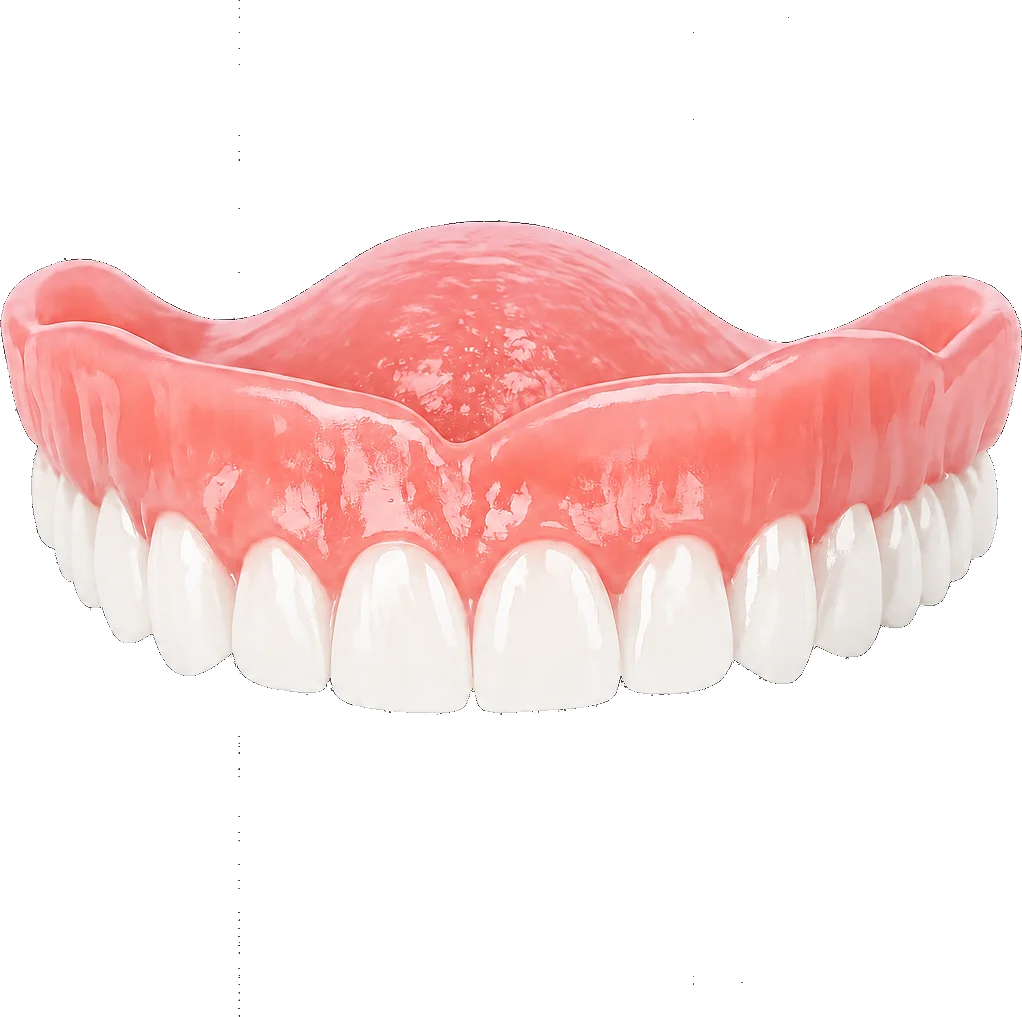
When all the teeth in the upper jaw, lower jaw, or both are missing, a complete denture replaces them. The upper denture has a plate that covers the roof of the mouth for stability; the lower one is shaped like a horseshoe so your tongue still has room to move. Each set is shaped and shaded to suit your face, then crafted in our own Ottawa lab.
Partial dentures
If you still have some healthy natural teeth, a partial denture fills the gaps between them instead of replacing everything. It attaches to your remaining teeth with a discreet clasp or attachment, and the base is shaded to match your gums so it blends in. A partial also helps stop your remaining teeth from gradually shifting out of position.
Immediate dentures
An immediate denture is fitted the same day your teeth are removed, rather than after weeks of healing. It protects the extraction sites, can help reduce bleeding, and means you’re not without teeth in public while you recover. Because your gums continue to change shape over the following months, an immediate denture is usually relined or adjusted later for a more secure, comfortable fit.
Implant-retained dentures
An implant-retained denture, sometimes called an overdenture, clips onto two or more dental implants placed in the jawbone. The added stability can help if a conventional denture tends to shift, and the implants themselves help slow the bone loss that naturally follows tooth loss. It does require enough healthy bone to support the implants, which your denturist and a dental surgeon assess together.
Whichever type fits your mouth, the goal is the same — a comfortable, natural-looking denture that lets you eat, speak, and smile without thinking twice about it.
What life with dentures is like
Like any new dental work, dentures take a short adjustment period. Speech can sound slightly different for the first week or two while your tongue and cheeks learn the new shape in your mouth — reading aloud at home is a simple way to speed that up. Eating is usually easiest if you start with softer foods cut into smaller pieces, then work back up to a fuller diet as your confidence builds.
Day-to-day care is straightforward once it becomes a habit:
- Rinse your dentures after meals to clear away loose food particles.
- Brush them daily with a soft brush and a denture-specific cleaner, never regular toothpaste.
- Take them out overnight so your gums get a rest.
- Handle them over a folded towel or water-filled sink in case you drop them.
If a denture ever feels loose, causes ongoing irritation, or cracks, avoid adjusting it yourself — book a visit so our team can look at it properly.
Who makes your dentures
A denturist is a regulated professional, licensed by the College of Denturists of Ontario, who examines your mouth, designs your dentures, and fits and adjusts them until they feel right. Our denturists work closely with the technicians in our own Ottawa lab, who craft each denture by hand to the measurements and shade your denturist specifies. Keeping design and craftsmanship under one roof is what lets us fine-tune fit and appearance rather than working from a generic template.
Coverage and cost
Cost varies with the type of denture, the materials used, and any preparation your mouth needs first, so it’s worth discussing your specific situation rather than guessing from an average. Many patients are also eligible for support through the federal Canadian Dental Care Plan (CDCP); we direct-bill CDCP for eligible treatment and can help you check your own coverage before you commit to anything.
Next steps
A conversation with a denturist who can look closely at your mouth is the clearest way to find out which option suits you. Book a free consultation with our team and we’ll walk you through your options in plain language, at your own pace.
Reviewed by our licensed denturists · Updated July 2026